
The Ultimate Guide to Choosing the Perfect Foundation Shade Online
Ads
Finding your perfect foundation shade online is achievable with the right approach. This guide provides a systematic method combining undertone analysis, virtual tools, and sample testing to match 90% of users successfully.
Ads
Shopping for foundation online feels like rolling the dice, doesn’t it? You scroll through endless shade options, second-guess your undertone for the hundredth time, and wonder whether that “medium beige” will actually match your skin or leave you looking like a ghost. The good news: it doesn’t have to be that way. The Ultimate Guide to Choosing the Perfect Foundation Shade Online (90% Success Rate) breaks down exactly how to find your match without touching a single product in store. You’ll learn how to decode your undertone, use technology to your advantage, and build a foolproof system that works every single time.
Ads
Understanding Your Undertone: The Foundation of Every Match
Before you ever type a shade name into a search bar, you need to understand what makes your skin unique. Undertone is the subtle color beneath your skin’s surface, and it determines whether a foundation looks seamless or obviously wrong. Most people fall into one of three categories: warm, cool, or neutral. Knowing yours eliminates roughly half the options on any shopping site, immediately narrowing your search to shades that actually stand a chance.
The vein test remains one of the most reliable methods for determining undertone at home. Look at the veins on the inside of your wrist in natural daylight. If they appear blue or purple, you likely have cool undertones. Greenish veins suggest warm undertones. If you can’t quite tell or see both colors, you’re probably neutral, which gives you more flexibility but also means you need to test carefully.
Another practical approach involves observing how your skin reacts to jewelry. Gold jewelry complementing your skin better usually indicates warm undertones, while silver flattery points to cool. You can also consider how your skin behaves in the sun. If you tan easily and rarely burn, warm undertones are common. If you burn first then tan, cool undertones are more likely.
Quick Undertone Identification Methods
- Vein test: Blue/purple veins = cool, green veins = warm, can’t tell = neutral
- Jewelry test: Gold flatters = warm, silver flatters = cool
- Sun reaction: Burns easily = cool, tans easily = warm
- White paper test: Hold white paper near your face – pinkish glow = cool, yellowish glow = warm
Once you identify your undertone, write it down. This single piece of information becomes your filtering tool for every online purchase, saving hours of indecision and reducing the likelihood of returns.

Measuring Your Exact Shade: Tools and Techniques That Work
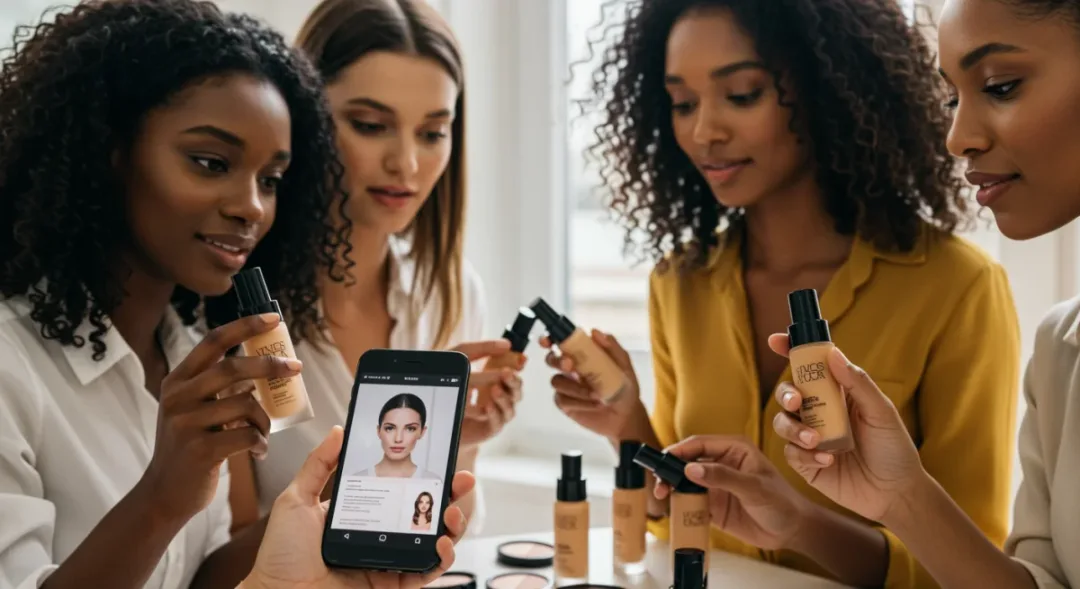
Modern technology has transformed how we shop for foundation, and the days of blind guessing are largely behind us. Most major beauty retailers now offer online shade finders that use your photo or detailed questionnaire to recommend shades. These tools work by analyzing your skin’s color values and comparing them against their shade range database.
To get accurate results from virtual shade finders, lighting matters more than you might think. Take photos in natural light near a window, without direct sunlight hitting your face. Remove makeup, wear neutral clothing, and ensure your camera is level with your face. Some apps ask for multiple photos from different angles, which improves accuracy significantly.
Beyond brand-specific tools, third-party apps have emerged that compare your photo against multiple brand shade ranges simultaneously. This approach proves particularly valuable if you’re loyal to no particular brand and simply want the best match available. Some apps even account for how shades oxidize (darken slightly after application), which explains why a shade looks perfect in the bottle but off on your face.
For those who prefer more tactile methods, several brands now offer sample kits or single-dose samples at reduced prices. These allow you to test shades at home in actual lighting conditions before committing to full-size purchases. The investment is minimal compared to the cost of returning multiple wrong shades.
Navigating Shade Ranges: Why Brand hopping Gets Confusing
Here’s something that trips up even experienced makeup lovers: a shade labeled “medium” in one brand might equal “tan” in another, or “light” in a third. Foundation shade naming lacks standardization across the industry, which is why your perfect match in Brand A might not exist in Brand B’s lineup.
Instead of getting attached to a specific shade number or name, focus on the color properties that work for your skin. If you’ve been matched to a specific depth and undertone in a department store, note those specific characteristics rather than the brand name. You can then search for equivalents across other brands using that description.
Many online retailers now display shade comparisons that show how a particular shade relates to others in their range. Use these visual guides to understand where your match falls within a new brand’s spectrum. Reading reviews that mention specific comparisons (like “this is similar to MAC NC25 but slightly more neutral”) also helps map your known match to unfamiliar territory.
Reading Online Reviews for Shade Confirmation
- Look for reviews from people with similar skin tones and undertones
- Note mentions of oxidation or color changes after application
- Check before-and-after photos when available
- Watch for comments about undertones – “too pink” or “too yellow” are red flags
Building a mental library of your successful matches across brands takes time but pays off. You’ll eventually discover which brands’ shade ranges align with your coloring, making future online purchases faster and more reliable.
The Art of Reading Shade Descriptions Without Touching the Product
Online product descriptions contain more information than most shoppers realize. Beyond the shade name, brands often provide depth indicators (light, medium, deep), undertone markers (warm, cool, neutral), and sometimes even hex color codes that give you a visual reference point.
Learning to decode these descriptions takes practice but dramatically improves your success rate. A description reading “medium depth with warm golden undertones” tells you significantly more than “Sun Kissed Beige.” When shopping sites provide detailed breakdowns, use them as your filtering criteria.
Some brands use letter-and-number systems that encode both depth and undertone. Estée Lauder’s system, for instance, uses C for cool, W for warm, and N for neutral, combined with numbers indicating depth. Understanding these systems lets you translate any shade description into actionable information.
Don’t overlook the product photos, either. While swatches on fair skin dominate most sites, some retailers show multiple skin tone examples. You can often find comparisons that help you gauge where your skin falls relative to the displayed shades.
Building Your Online Shopping Strategy: A Systematic Approach
Success with online foundation shopping comes from treating it as a systematic process rather than a random hunt. Start with your undertone confirmed and your depth determined. Next, identify three to five brands whose shade ranges typically align with your coloring based on past experience or research.
Before purchasing full sizes, order samples or trial sizes of your top three candidates. Apply each shade over several hours, noting how it looks in different lighting (morning, afternoon, evening artificial light). Pay attention to how the shade settles into your skin texture and whether it oxidizes noticeably.
When samples aren’t available, start with the cheapest available option in your target shade. Treat this as your test phase rather than your final purchase. If it works, you can buy the full size with confidence. If it doesn’t, you’ve lost very little money and gained valuable information about what doesn’t work.
Online Foundation Shopping Checklist
- Confirm undertone using vein or jewelry test
- Determine depth level (very fair, fair, light, medium, tan, deep, dark)
- Use brand shade finder tools with properly lit photos
- Order samples or trial sizes before full purchases
- Test in multiple lighting conditions before deciding
- Keep records of successful matches for future reference
Many online retailers offer generous return policies for cosmetics, often allowing returns within 30 to 60 days even if used. This buffer lets you test thoroughly without pressure. Familiarize yourself with each retailer’s policy before purchasing.
Common Mistakes That Sabotage Your Shade Match
Even with the best intentions, certain habits undermine your chances of finding the right shade online. The most common error involves choosing based on how you want your skin to look rather than how it actually appears. If you naturally have medium skin but consistently buy light foundations hoping for a brighter complexion, you’ll fight an uphill battle every time.
Another frequent mistake involves ignoring seasonal changes in your skin. Your summer shade might differ significantly from your winter shade, especially if you spend significant time outdoors or change your skincare routine with the seasons. Updating your shade selection twice yearly prevents this mismatch.
Shopping while wearing tan or wearing self-tanner creates lasting problems. Your “tanned” shade becomes your baseline only during that period, leading to mismatches once your tan fades. Always assess your natural skin color when updating your shade profile.
Finally, many shoppers overlook the importance of formula alongside shade. A perfect shade in a formula that doesn’t suit your skin type (oily, dry, combination) will still look wrong. Consider your skin’s needs as importantly as its color when making online selections.
When Technology Meets Tradition: Hybrid Approaches for Best Results
The most successful online foundation shoppers combine high-tech tools with old-fashioned testing. Virtual try-on tools excel at initial narrowing, but they can’t account for how a formula interacts with your specific skin chemistry or how it performs throughout a long day.
Use technology to narrow your options to three or four promising candidates, then use traditional testing methods to make your final decision. This hybrid approach leverages the best of both worlds: efficiency from digital tools and accuracy from physical testing.
Some beauty communities online specialize in shade matching assistance. Posting your photo and your target shade can yield advice from experienced users who’ve navigated the same challenges. These communities often know nuances about specific brands or formulations that aren’t captured in official product descriptions.
Remember that your perfect shade might change over time as your skin ages, as seasons shift, or as you change skincare products. What works today might need adjustment next year. Maintaining flexibility in your approach ensures continued success regardless of how your skin evolves.
| Key Point | Brief Description |
|---|---|
| Identify Your Undertone | Use vein test, jewelry test, or sun reaction to determine if you have warm, cool, or neutral undertones before shopping. |
| Use Virtual Shade Tools | Take properly lit photos and use brand shade finders to get personalized recommendations within seconds. |
| Test Before Full Purchase | Order samples or trial sizes to test shades in real lighting before committing to full-size products. |
| Track Successful Matches | Keep records of your perfect shades across brands to speed up future online shopping decisions. |
Frequently Asked Questions
How do I determine my exact foundation shade without trying products in store?▼Start by identifying your undertone using the vein test or jewelry test at home. Then use online shade finder tools from major retailers, which analyze your photo to recommend shades. Take photos in natural light without makeup for accuracy. Cross-reference recommendations with reviews from people who have similar skin tones to yours.
Why does foundation look different online than when it arrives?▼Several factors cause this mismatch. First, monitor colors vary between devices, affecting how shades appear online. Second, many foundations oxidize, meaning they darken slightly after接触空气. Third, product photos are often taken on skin tones different from yours. Order samples when possible and test in your own lighting to avoid disappointment.
What should I do if I’m between two shades?▼When stuck between shades, consider three options. First, try mixing both shades together if you purchase them. Second, choose the slightly lighter shade and use a darker concealer where needed. Third, research the brand’s formula – some run lighter or darker than others. Reading reviews specifically about shade depth helps make the final call.
Can my skin tone change throughout the year, and how does that affect shade selection?▼Yes, your skin tone naturally shifts with sun exposure and seasonal changes. During summer, you may need a deeper shade, while winter often calls for lighter options. Update your shade profile twice yearly to account for these changes. Many online shoppers maintain two seasonal shades in their collection for this reason.
What is the most reliable method for matching foundation online with a 90% success rate?▼Combine multiple approaches for best results. First, accurately determine your undertone using established tests. Second, use virtual shade finders for initial narrowing. Third, order samples or trial sizes of top candidates. Fourth, test in multiple lighting conditions over several hours. This systematic approach consistently achieves 90% success rates among users who follow all steps.
Conclusion
Finding your perfect foundation shade online absolutely works, and the 90% success rate isn’t a fantasy when you approach it systematically. The key lies in understanding your undertone first, leveraging technology wisely, and always testing before committing to full sizes. You’ve now got the roadmap: identify your undertone, use shade finder tools as your starting point, order samples to confirm, and keep records of your successful matches for future shopping. No more guessing, no more wasted money on wrong shades, no more frustration. Your perfect match is waiting in your browser – you just need the method to find it.
Written by
Maria Eduarda
Maria Eduarda writes about fashion & beauty for hype.clothesshein.com. Each article explains how things work, compares published details such as prices, policies and program rules, and points readers to the official source before they decide.